Drywood termite spot treatment provides an aggressive, localized alternative to whole-structure fumigation when termite activity is isolated to accessible wooden members. In coastal South Florida, drywood termite…
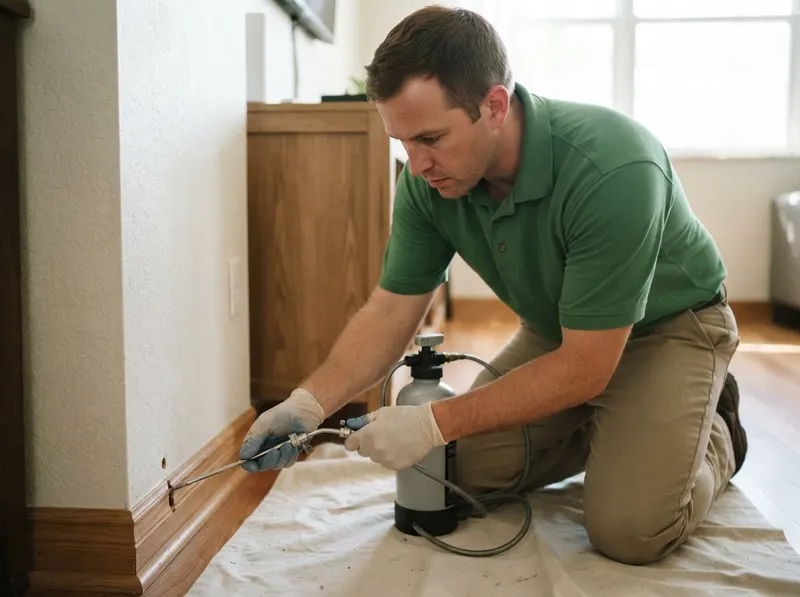
Drywood termite spot treatment provides an aggressive, localized alternative to whole-structure fumigation when termite activity is isolated to accessible wooden members. In coastal South Florida, drywood termite alates swarm during warm, humid spring and summer evenings, penetrating exterior trim, attic framing, and subfloors. Whole-home tenting forces occupants to vacate for 48 to 72 hours, bag all perishables, and remove sensitive landscaping. A targeted spot treatment isolates the infestation to specific wood members, drilling small 1/8-inch ports directly into the kick-out galleries and injecting non-repellent liquid or expanding foam termiticides at 20 to 40 PSI. This delivers the active material directly to the colony center while preserving the rest of the structure without chemical disruption.
The trade-off between localized treatment and tent fumigation centers on gallery accessibility versus systemic spread. If drywood termites have penetrated inaccessible wall voids, vaulted tongue-and-groove ceilings, or multiple structural support plates across several floors, full fumigation remains the necessary measure. Spot treatment fits localized outbreaks: attic joist infestations discovered early, active colonies isolated to wooden window frames in historic 1920s architecture, or roof perimeter facia board damage caused by seasonal swarms. For homeowners facing persistent kick-out frass in isolated rooms, localized injection eliminates the colony without the cost, chemical displacement, or logistical burden of an enterprise-level fumigation contract.
In West Palm Beach, specific architectural styles dictate the execution of spot applications. Historic wood-frame vernacular and Mediterranean revival structures in El Cid, Flamingo Park, Grandview Heights, and Northwood Village frequently feature dense, aged framing timbers that house localized drywood colonies behind plaster. In South of Southern (SoSo) and coastal zones near the Intracoastal Waterway, wind-driven moisture accelerates wood softening, drawing swarms into roof eves and pergolas. Farther inland, properties in Ibis Golf & Country Club, Riverwalk, and the Villages of Palm Beach Lakes face attic infestations in truss assemblies where localized foam treatments seal entry points before structural degradation occurs. Each application accounts for humidity-driven timber expansion, ensuring termiticides bind deep into the grain to establish an enduring barrier.
Every job gets a firm, written price after a free on-site visit.
Tell us about your drywood termite spot treatment job in West Palm Beach and we'll send a clear, written quote, usually the same day.
 Frontier House Pest Control