Operating a commercial culinary operation along the coastal corridors of Downtown West Palm Beach or the Clematis District means battling extreme humidity, floor-level heat loads, and continuous organic grease…
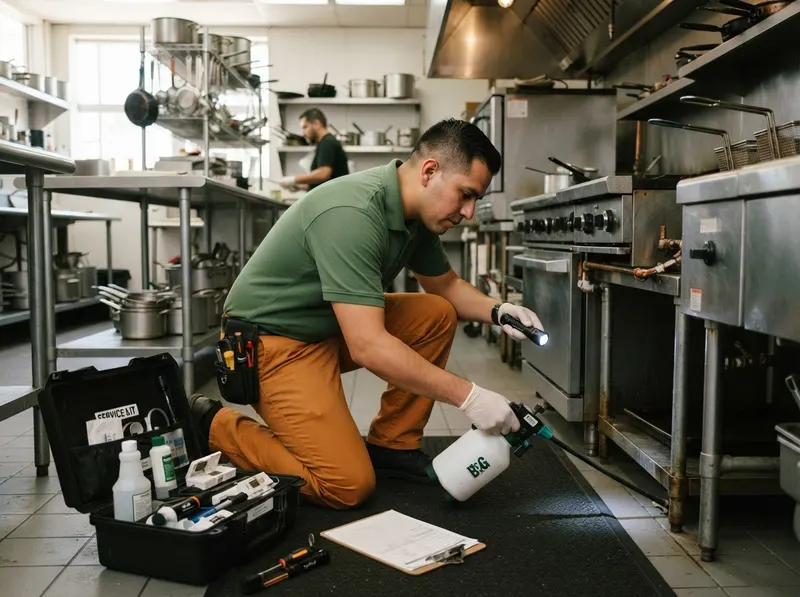
Operating a commercial culinary operation along the coastal corridors of Downtown West Palm Beach or the Clematis District means battling extreme humidity, floor-level heat loads, and continuous organic grease accumulation. Florida's subtropical climate forces pests into active indoor microclimates year-round. Standard surface sprays break down rapidly under nightly hot-water washdowns and heavy industrial degreasers. Commercial kitchen pest containment replaces temporary surface applications with structural barrier work: sealing wall penetrations behind stainless steel prep tables, applying non-repellent insect growth regulators directly into cabinet framing voids, and treating organic floor slime where fly larvae breed. This direct method halts recurring flare-ups in high-density dining hubs like Northwood Village and historical conversions in Grandview Heights without contaminating open preparation surfaces.
The service model separates targeted kitchen containment from standard commercial contracts. National pest corporations frequently mandate 12-month recurring contracts that charge monthly fees for brief five-minute surface checks. Commercial kitchen containment focuses on immediate structural stabilization, targeted void injections, and localized non-food-contact baiting. Facilities requiring containment typically exhibit severe pressure points: hollow stainless-steel legs, unsealed conduit junctions beneath deep fryers, and cracked tile grout around trench drains. Containment establishes a hard stop: bio-enzymatic agents strip the bio-film inside floor drains, while borate-based structural dusts seal interior motor housings where German cockroaches nest. The trade-off is mechanical access: containment requires culinary staff to clear equipment casters, pull cooking lines forward, and remove bottom-shelf prep storage to allow unobstructed application to every perimeter expansion joint.
From catering commissaries servicing Ibis Golf & Country Club and Villages of Palm Beach Lakes to tight boutique kitchens in El Cid, Flamingo Park, Riverwalk, and SoSo (South of Southern), layout geometry determines the containment barrier plan. Moisture pooling near refrigeration compressors draws pests from adjacent plumbing chases connected to municipal drainage lines. Containment treats every mechanical penetration passing through concrete slab foundations and drywall partitions. Work proceeds in three defined stages: first, non-repellent formulations and insect growth regulators are injected into hidden equipment cavities; second, enzymatic digestants break down fats, oils, and grease inside secondary plumbing lines; third, physical exclusion seals plumbing collars and wall seams with silicone-copper mesh matrices, stopping structural reinvasion.
Every job gets a firm, written price after a free on-site visit.
Tell us about your commercial kitchen pest containment job in West Palm Beach and we'll send a clear, written quote, usually the same day.
 Frontier House Pest Control